
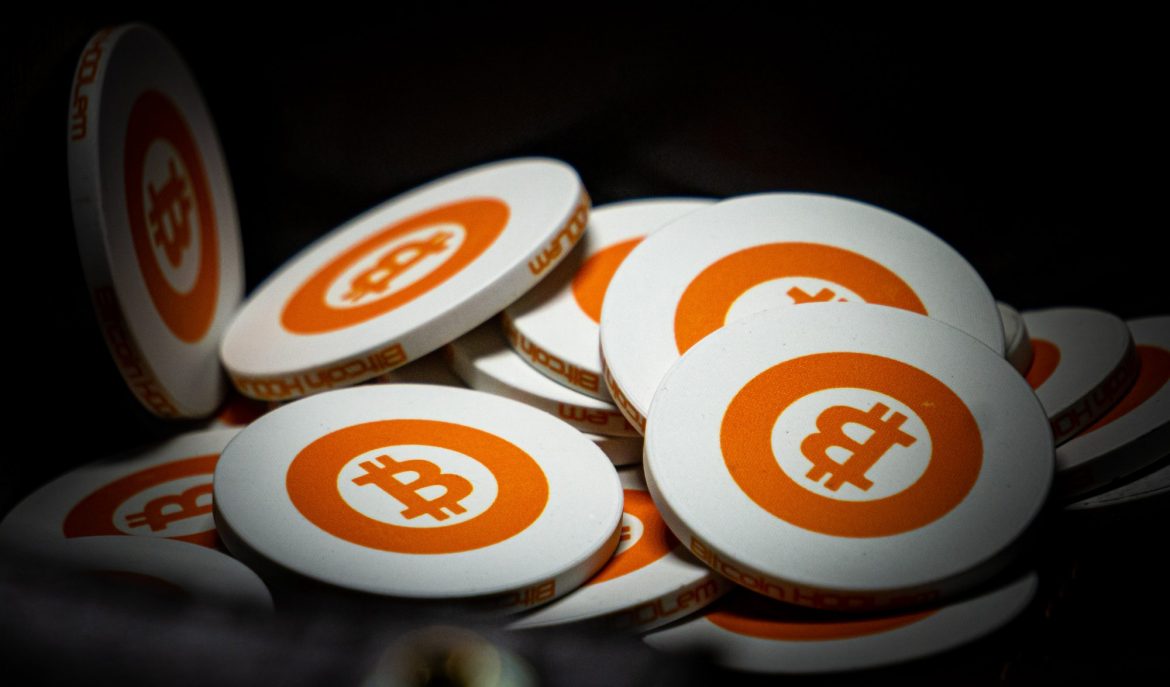
Many of us are aware of popular cryptocurrencies such as Bitcoin or Ethereum, but for others they remain something of an abstract financial concept. But what is cryptocurrency, how did it emerge as a form of electronic payment and how does it address the potential problem known as double-spending?
A brief history of cryptocurrencies
The precursor to cryptocurrencies was eCash or DigiCash, which was launched in 1995. This was an anonymous, encrypted electronic payments system devised by a computer scientist, David Chaum. It used public-key digital signatures to ensure security.
While this payment system was initially successful, by 1998, increasing competition from credit cards led to its demise. However, this payment concept sparked a great deal of interest within the academic community and resulted in several research papers being published on the subject.
In 2008, Satoshi Nakamoto published a white paper called Bitcoin: A Peer to Peer Electronic Cash System in which he described the Bitcoin blockchain. The invention of the Bitcoin is usually attributed to Nakamoto. However, the name is probably pseudonymous and there is no such person, although several people have claimed to be him.
His concept was for a decentralised currency that used a distributed ledger (the blockchain) to prevent double spending. He went on to create the first Bitcoin block, known as the Genesis Block.
The first time Bitcoin was used a form of payment was in 2010, when two pizzas were purchased at a cost of 10,000 Bitcoins. To put that in context, at the time of writing a single Bitcoin is worth approximately US $8,000, so had the pizza restaurant retained the original Bitcoins, they would now be worth US $80 million.
Many early Bitcoin investors became exceptionally rich, and many who bought at the peak price of US $19,783 in December 2017, lost a great deal of money. The peaks and troughs of the Bitcoin price also raised an interesting question: should Bitcoin be considered an investment product or another form of payment currency or both.
What is cryptocurrency?
The terms cryptoassets and cryptocurrencies are often used interchangeably, although the latter is much more commonly used. The word crypto can mean ‘hidden’ or ‘secret’ or even ‘puzzle’; and currency of course, is a form of payment used in exchange for goods and services.
Arguably, the best way to explain cryptocurrencies is to use Bitcoin as an example. Bitcoin is a medium of electronic exchange through the internet; it uses cryptography (the solving a mathematical puzzle by users), to create and record financial transactions. This is known as mining and it is carried out using extremely powerful computers.
The most fundamental feature of Bitcoin is that it is decentralised; this means that is not issued or controlled by a central bank or government or other monetary authority. It also means that Bitcoins are not legally considered to be money or currency.
The integrity, security and safety of cryptocurrencies are ensured by recording all transactions on a blockchain. This is a type of distributed ledger that cannot be changed, edited or modified.
When two parties exchange cryptocurrency, they do so by using public and private cryptographic keys. Nobody else is involved in the process. It is an entirely peer-to-peer transfer.
Once the exchange has been made and entered on the blockchain, the record is immutable. As no third party is involved, processing fees are significantly less than conventional banking charges.
What is the double-spending problem?
A critical element of Nakamoto’s proposal was his solution to the double-spending problem. But what do we mean by double-spending?
At present, your bank maintains a ledger of all your financial transactions. This prevents you from spending your money multiple times.
But without any central authority, how can you prevent say Peter receiving one Bitcoin from Paul and then using it to purchase the equivalent of one Bitcoin worth of products from Mary and then duplicating it electronically to purchase another Bitcoin worth of services from Jane?
This was the essence of Nakamoto’s work. He showed that if every node in a network maintained identical transaction logs of every transaction (the blockchain), then, at least in theory, double-spending would be impossible.
How do cryptocurrencies work?
To learn more about cryptoassets and how cryptocurrencies work in practice, please click here.


